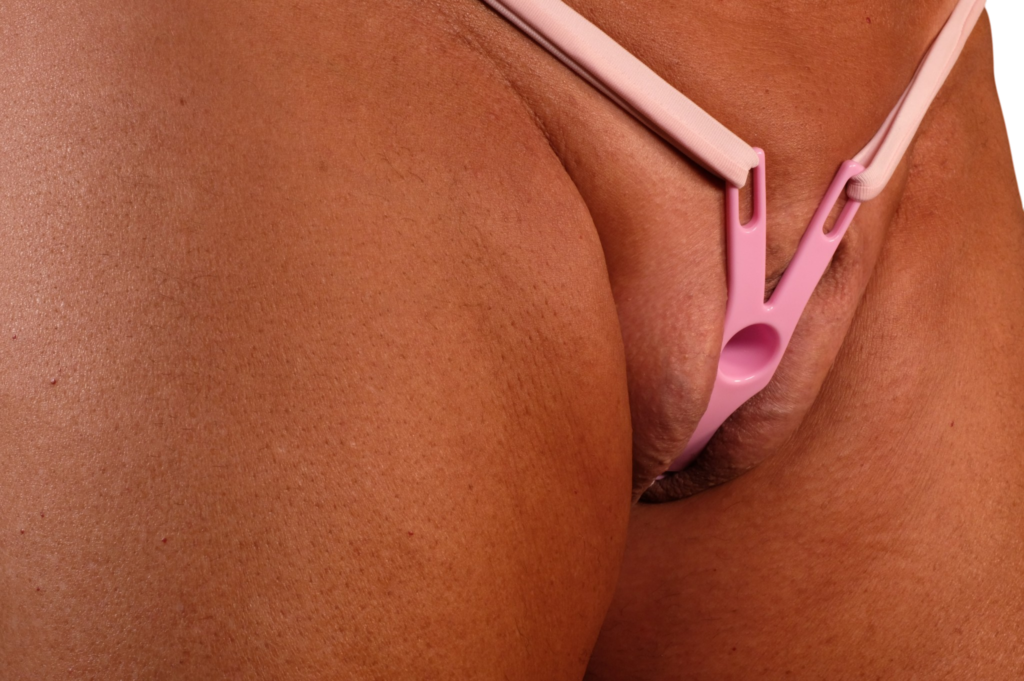
Understanding Feminizing Options for Creating a Vaginal Appearance: Surgery, Tucking Devices, Clips, and External Feminizers for Trans Women
For many transfeminine people, gender-diverse individuals, crossdressers, and others exploring feminization, the desire to create a flatter, more traditionally feminine genital appearance can be deeply personal. For some, it is about gender affirmation. For others, it may be tied to comfort in clothing, swimwear, intimacy, aesthetics, or personal identity.
There is no single path to achieving a “trans vagina” or feminine front appearance. Options range from permanent surgical procedures to non-surgical temporary tools like tucking methods, clips, external shaping devices, and feminizing garments.
Each approach offers different levels of permanence, cost, maintenance, realism, and personal commitment.
What Does “Having a Feminine Vaginal Appearance” Mean?
For many people, this can mean one or more of the following:
- Reducing visible bulge
- Creating a smooth front under clothing
- Mimicking the visual look of external vulva anatomy
- Enhancing comfort in feminine clothing
- Aligning body appearance with gender identity
- Preparing for or exploring femininity before surgery
Some seek a realistic anatomical transformation, while others prioritize visual presentation only.
1. Gender-Affirming Vaginoplasty Surgery (Permanent Option)
For many trans women, vaginoplasty is the most comprehensive surgical route.
Common goals:
- Creation of a vaginal canal (in many techniques)
- Creation of labia and vulva
- Removal or restructuring of penile tissue
- Feminized genital appearance
- Greater body congruence
Common Surgical Methods
Penile Inversion Vaginoplasty
The most widely known method, using existing genital tissue to construct vaginal structures.
Peritoneal Pull-Through or Peritoneal Flap
Uses abdominal lining tissue, often offering depth and lubrication advantages.
Colon/Sigmoid Vaginoplasty
Uses a section of colon tissue, sometimes selected for revision or specific anatomical needs.
Benefits:
- Permanent
- Can provide functional anatomy
- Often deeply affirming
- May reduce dysphoria significantly
Considerations:
- Major surgery
- Recovery time
- Cost
- Dilation requirements (depending on technique)
- Surgical risks
- Emotional and logistical preparation
For many, surgery is life-changing, but it is not the right choice—or accessible choice—for everyone.
2. Tucking (Non-Surgical, Temporary, Widely Used)
Tucking is one of the most common non-surgical methods for creating a flatter front.
How it works:
- Genitals are positioned back or compressed
- Specialized underwear, tape, or garments smooth the area
Common tools:
- Gaffs
- Compression underwear
- Tucking panties
- Tape (used carefully)
- Swimwear with built-in tucking support
Benefits:
- Temporary
- Accessible
- Clothing-friendly
- Can be very effective visually
Considerations:
- Comfort varies
- Long wear may cause irritation
- Hygiene matters
- Fit and safety are essential
For many, tucking is the first step in feminized presentation.
3. MTF Clips / Fufu Clips / Compression Clips
Various commercial or niche devices are marketed to temporarily reshape or minimize the external genital profile.
These can include:
- Compression clips
- Retraction clips
- Feminizing shaping clips
- “Fufu” style devices designed to create a smoother silhouette
General purpose:
These devices are often intended to:
- Hold tissue in a tucked position
- Reduce protrusion
- Enhance camel-toe or flat-front effects
- Increase visual femininity under tight clothing or swimwear
Potential Benefits:
- More sculpted appearance than standard tucking alone
- Reusable
- May pair with specialty garments
- Can create stronger visual transformation
Important Considerations:
Because these products vary widely, safety is critical:
- Avoid excessive compression
- Monitor circulation
- Prioritize comfort
- Be cautious of pinching or skin damage
- Use body-safe materials
Not all devices are medically designed, so informed use is essential.
4. External Feminizers / Prosthetic Vulva Designs
Some products are designed specifically to simulate external vulva appearance without surgery.
These may include:
- Silicone prosthetics
- Front panels integrated into underwear or swimwear
- Feminizing shapewear
- Camel-toe illusion garments
Benefits:
- Visual realism
- Temporary
- No surgery
- Can be used for photos, fashion, or confidence
Drawbacks:
- Heat retention
- Cost
- Realism varies
- Maintenance and cleaning
For some, these products offer exploration or affirmation before considering more permanent steps.
5. Hormonal Changes and Soft Tissue Feminization
Hormone replacement therapy (HRT) does not create a vagina, but it can influence:
- Skin softness
- Reduced erectile tissue prominence
- Fat redistribution
- Overall genital appearance changes
This can make some tucking or feminizing methods easier or more comfortable over time.
Why People Choose Different Paths
Surgery:
Often chosen for permanent gender affirmation.
Clips / Tucking:
Often chosen for flexibility, affordability, or experimentation.
External Feminizers:
Often chosen for aesthetics or occasional presentation.
Combination:
Many people use temporary methods before surgery—or instead of it.
Psychological and Emotional Dimensions
For many people, creating a feminine genital appearance is not simply cosmetic.
It can relate to:
- Dysphoria relief
- Confidence
- Identity alignment
- Sexual comfort
- Public presentation
- Swimwear or fashion goals
What feels empowering differs from person to person.
Safety Matters
Regardless of method:
- Avoid excessive pressure
- Prioritize hygiene
- Monitor skin health
- Research products carefully
- Consult gender-affirming medical professionals when considering surgery or long-term body modification
Social Reality: There Is No “One Right Way”
Some trans women pursue surgery.
Some do not.
Some use clips, tucking, or feminizers daily.
Some only occasionally.
Being valid in one’s identity does not depend on a specific anatomy or product.
Choosing What Works for You
Questions many people consider:
Do I want permanence?
If yes, surgery may be worth exploring.
Do I want flexibility?
Tucking or garments may fit best.
Is realism important?
External prosthetics may help.
Is comfort my top priority?
Garment-based solutions may be ideal.
Final Thoughts
The path toward a feminine genital appearance can be deeply individual, shaped by identity, budget, comfort, access, and personal goals.
Whether through:
- Vaginoplasty
- Tucking
- Clips
- Fufu-style shaping tools
- External feminizers
- Specialized swimwear or underwear
…there are more options than ever before for people seeking gender affirmation or feminized presentation.
For some, the journey is about permanent transformation.
For others, it is about expression, comfort, or exploration.
Ultimately, the best approach is the one that supports your body, your identity, your safety, and your sense of self.